If you've started looking into land clearing for your Tampa Bay property, you've probably come across the term "forestry mulching." It's gotten a lot of attention in the last few years, and for good reason -- it's faster, often cheaper, and leaves the ground in better shape than traditional clearing methods.
But forestry mulching isn't the right call for every job. Some properties need traditional clearing with excavators, chainsaws, and haul trucks.
Here's the honest breakdown of both methods so you can figure out which one makes sense for your situation.
What Is Forestry Mulching?
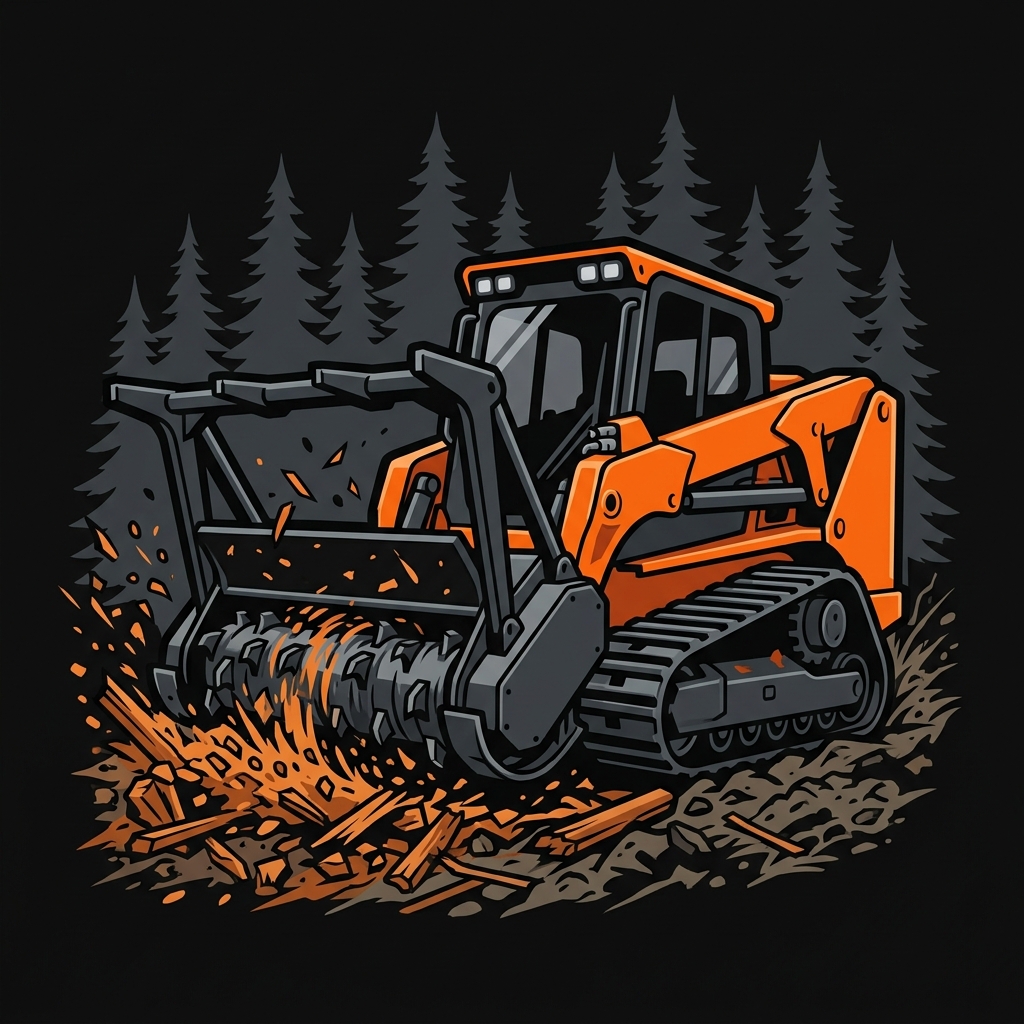
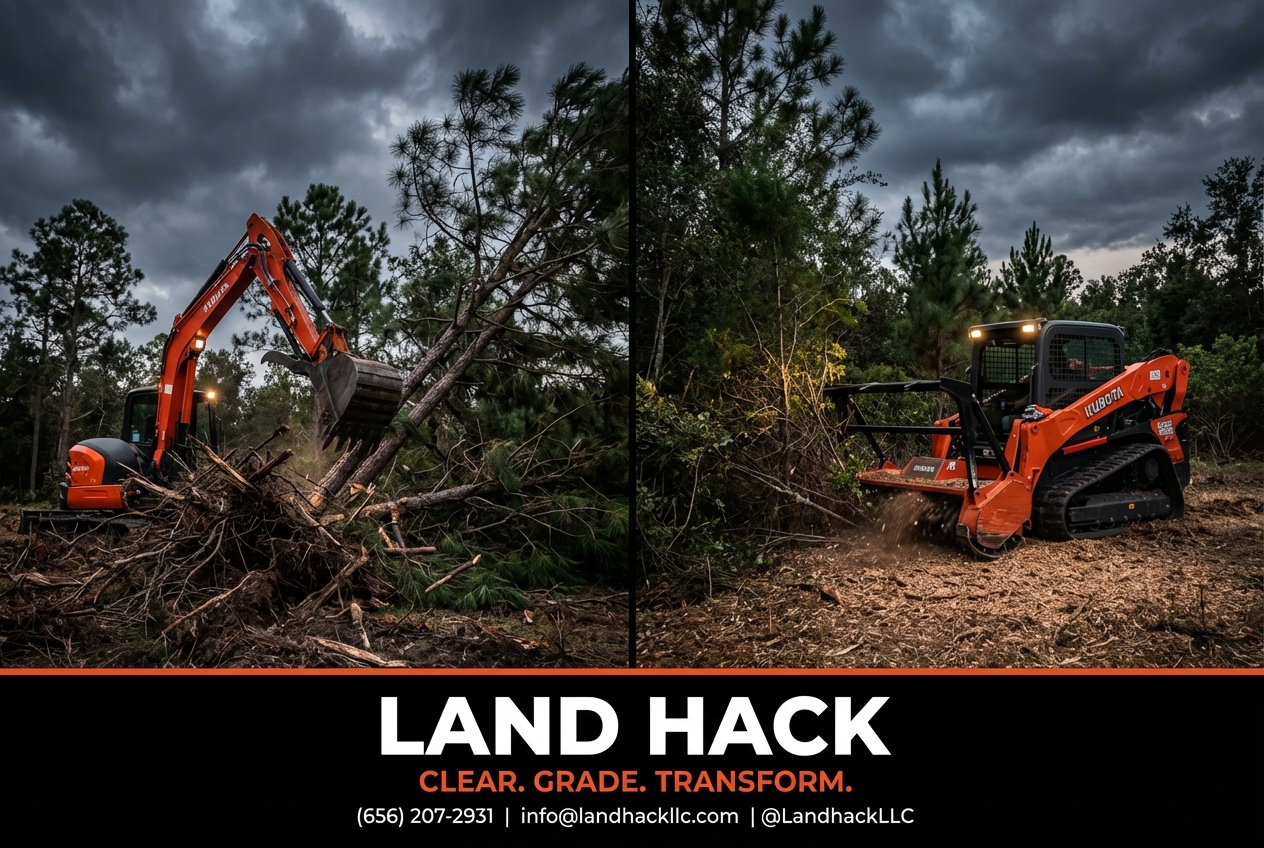
Forestry mulching uses a single machine -- a skid steer or tracked carrier with a rotary mulching head -- to cut, grind, and shred trees, brush, and vegetation directly into the ground. The machine turns standing vegetation into a layer of organic mulch that stays on-site.
Think of it as a giant brush shredder on tracks. It drives through the property and processes everything in its path. Small trees (generally up to 8-10 inches in diameter), brush, vines, saw palmetto, and undergrowth get ground into chips and spread across the ground.
Here's what makes it different from traditional methods:
- One machine does the work. No chainsaws, no separate chipping crew, no haul trucks.
- Nothing leaves the property. The mulched material stays on the ground as a natural erosion barrier.
- The root systems stay intact. This is key for erosion control, especially on slopes or sandy Florida soil.
- It's fast. A mulching head can clear an acre of moderate brush in a few hours.
In the Tampa Bay climate, that ground mulch breaks down over 6-12 months and actually improves the soil. It suppresses weeds, retains moisture, and prevents erosion -- all without adding any chemicals or materials. View our brush removal services.
Traditional Land Clearing: How It Works
Traditional land clearing is what most people picture: excavators, bulldozers, chainsaws, dump trucks. The crew cuts down trees, pushes over vegetation, removes stumps, and hauls everything off-site to a disposal facility or burn site.
The process usually looks like this:
- Felling -- Chainsaw crews cut down trees and large brush.
- Pushing/Stacking -- An excavator or bulldozer pushes debris into piles.
- Loading -- A loader picks up debris and loads it into haul trucks.
- Hauling -- Trucks carry material to a landfill, mulch yard, or disposal site.
- Stump removal -- A stump grinder or excavator removes root balls.
- Grading -- The cleared lot gets leveled and graded.
Traditional clearing handles anything. 30-inch oak trees, concrete debris, old structures, massive root systems -- all of it. There's no size limitation like with mulching. When you need a property taken down to bare dirt and graded flat for construction, this is the method. View our land clearing services.
Forestry Mulching vs. Traditional Clearing: Side-by-Side Comparison
Here's where most articles get vague. We'll give you real numbers based on what we see on Tampa Bay jobs.
| Factor | Forestry Mulching | Traditional Clearing |
|---|---|---|
| Cost per acre | $1,500 - $3,500 | $3,000 - $6,000+ |
| Timeline (1 acre) | 1 day or less | 2-4 days |
| Max tree diameter | 8-10 inches typical | No limit |
| Stump removal | No (stumps ground at surface) | Yes (full removal available) |
| Debris hauling | None -- stays on-site | Required (adds cost) |
| Erosion control | Excellent -- mulch layer protects soil | Requires separate measures |
| Ground disturbance | Minimal | Significant |
| Best for | Brush, small trees, overgrown lots | Large trees, construction prep |
| Equipment needed | 1 machine | Multiple machines + trucks |
Cost Difference
The cost gap comes down to two things: equipment hours and disposal. Forestry mulching runs one machine for fewer hours and generates zero disposal fees. Traditional clearing requires multiple pieces of equipment, more crew members, and every truckload of debris costs money to haul and dump.
On a typical overgrown residential lot in Tampa with brush and trees under 10 inches, forestry mulching saves 30-50% compared to traditional clearing. See our full land clearing cost guide.
Speed
Forestry mulching is faster because there's no secondary processing. One pass through the property and the job is done. Traditional clearing requires cutting, stacking, loading, hauling, and then potentially grading -- each step takes time.
Environmental Impact
This matters more than most people think, especially in Florida. Forestry mulching preserves root systems and topsoil. The mulch layer prevents erosion, which is a real concern on Florida's sandy soils. Traditional clearing strips everything down to bare ground, which can create erosion and runoff issues -- particularly during our summer rainy season.
The Florida Department of Environmental Protection has specific guidelines on stormwater management that apply to cleared properties, and keeping ground cover intact through mulching can simplify compliance.
Ground Condition After Clearing
With forestry mulching, you're left with a layer of wood chips and organic material covering the ground. The property is cleared and accessible, but it's not bare dirt. This is perfect for properties where you want to maintain some ground cover, reduce future weed growth, or aren't building immediately.
Traditional clearing leaves bare ground -- which is exactly what you need if you're pouring a foundation, installing utilities, or doing any kind of construction that requires excavation and compaction.
Which Method Is Best for Your Tampa Bay Property?
Choose Forestry Mulching When:
- Your property has brush, small to medium trees (under 10 inches), and general overgrowth
- You want to clear land without stripping the topsoil
- Erosion control matters (slopes, waterfront, sandy soil)
- You're clearing for a fence line, trail, firebreak, or general property maintenance
- You're on a tighter budget and want to keep costs down
- You don't need the lot graded to bare dirt
- You plan to use the property for pasture, recreation, or future development that's not immediate
Choose Traditional Clearing When:
- Your property has large mature trees (12+ inches diameter)
- You're preparing the site for construction -- house, commercial building, driveway, etc.
- Full stump and root removal is required
- The lot needs to be graded and leveled to a specific elevation
- There's concrete, old structures, or non-organic debris to remove
- You need the property at bare dirt condition
Use Both When:
A lot of our jobs actually use both methods on the same property. We'll forestry mulch the brush and smaller trees across the lot, then bring in traditional equipment for the big trees that the mulcher can't handle. This hybrid approach keeps costs down while still getting everything cleared. View our tree removal services.
Why Land Hack Uses Both Methods
We're not a one-trick operation. Some land clearing companies only own a mulching head, so they push mulching on every job. Others only run heavy equipment and charge accordingly.
We run both because Tampa Bay properties are all different. A half-acre lot in Pasco County with saw palmetto and scrub oaks needs a different approach than a 2-acre parcel in Hillsborough with 80-foot pines and a build site that needs to be prepped.
When you call us, we look at your property and recommend the method that actually fits the job -- not the method that fits our equipment list. Sometimes that's pure forestry mulching. Sometimes it's traditional clearing. Most of the time, it's a smart combination of both that gets the best result at the best price.
We serve Hillsborough, Pinellas, Pasco, and Polk counties and handle everything from small residential lots to large commercial parcels. View our excavation services.
Frequently Asked Questions
Is forestry mulching cheaper than traditional land clearing?
In most cases, yes. Forestry mulching runs $1,500-$3,500 per acre around Tampa Bay. Traditional clearing is $3,000-$6,000+ per acre. The difference comes from needing one machine instead of several and not having to pay for hauling and disposal. But if you've got big trees, you'll still need traditional equipment for those -- mulching has size limits.
Can you build on land that has been forestry mulched?
Not right away. Mulching leaves organic material on the ground and doesn't pull out root systems. If you're building, the actual building pad still needs traditional clearing, stump removal, and grading. A lot of our clients mulch the overall property and then do targeted traditional prep where the structure is going.
How big of trees can forestry mulching handle?
The sweet spot is trees under 8-10 inches in diameter. Some bigger mulching heads can handle 12-14 inches, but it slows down and beats up the equipment. Anything bigger than that, we cut with a chainsaw and handle it the traditional way.
Does forestry mulching remove stumps?
It grinds them down at the surface, but the roots stay in the ground. For most situations -- pasture, general clearing, firebreaks -- that's fine. For construction, you'll need actual stump grinding or excavation to pull the roots. See our stump grinding services.
Get a Free Estimate for Your Tampa Bay Property
Not sure which method is right for your lot? That's what the site visit is for. We'll walk your property, look at what's growing on it, and tell you exactly what approach makes sense -- and what it'll cost.
Call Land Hack LLC at (656) 207-2931 or request a free quote online.
We serve Hillsborough, Pinellas, Pasco, and Polk counties. Free estimates, straight answers, no pressure.